
Moving holiday items always feels personal because every piece carries its own memory, and that’s why the process deserves extra attention. You make things smoother when you understand how to move Christmas ornaments to Philadelphia while keeping them safe through cold weather and tight city layouts, and Philly movers say the right preparation transforms stress into control. Philadelphia’s winter mix of freezing nights, narrow rowhome staircases, and uneven sidewalks demands a more careful approach than warm-weather moves. Homes in neighborhoods like Fishtown, Point Breeze, and Manayunk often have limited landing space for unpacking, so efficient organization saves you time and reduces risk. Packing stations with padding, consistent wrapping techniques, and good labeling help every step feel more manageable.
How Do You Sort Christmas Ornaments Properly Before Packing?
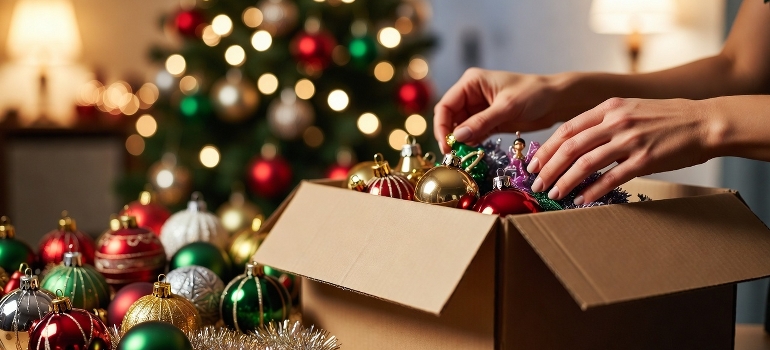
Sorting comes first when you want to move Christmas ornaments to Philadelphia. Each material reacts differently to pressure, vibration, and cold temperatures, and a mixed box tends to increase breakage rates fast. If you are looking for moving services in Philadelphia, look for professionals who always separate glass, ceramic, metal, fabric, wood, and handmade pieces because temperature swings across Philadelphia can weaken fragile ornaments. Glass ornaments need their own group so they aren’t squeezed by heavy pieces, and ceramic pieces chip easily during turns on city streets. Metal ornaments handle vibration better but still scratch if packed with painted pieces. Fabric ornaments pick up dust during moves into older buildings, so they should stay in sealed bags.
Which Sorting Choices Make Ornaments Break the Fastest?
Sorting isn’t busywork. It’s damage prevention, and the numbers behind it make the difference crystal clear. These quick facts show what actually cracks the most pieces when people move Christmas ornaments to Philadelphia.
- Mixed-material boxes raise breakage rates by 30–40%
- Glass shatters under 1–1.5 lbs of pressure
- Ceramic chips from drops as small as 6–12 inches
- Fabric ornaments retain up to 20% of dust in older rowhomes
- Philadelphia winter temps can swing 15–25°F within hours
Why Does a Clean, Padded Packing Station Matter So Much?
A padded surface prevents accidental slips, especially when you pack in tight spaces found in many Philadelphia rowhomes and small apartments. Last minute movers in Philadelphia recommend creating a station on a table or countertop lined with towels, foam sheets, or folded blankets. A soft surface makes a difference when you’re wrapping fragile items in a crowded kitchen or living room where boxes and furniture compete for space. Cold weather moves often force people to pack fast, but rushing without a padded station increases the chance of dropping items while wrapping them. A stable, cushioned base also keeps ornaments from rolling off the table when you reach for tape or tissue. Doesn’t a controlled workspace keep everything more organized during a hectic move?
How a Simple Padded Setup Prevents Costly Drops
A padded packing station turns a chaotic apartment into a controlled workspace. These facts show how much risk disappears once the surface is soft and stable.
- Padding absorbs 60–80% of impact force
- Countertops offer 2–3 sq. ft. more stability than tables
- Rowhomes average only 12–16 inches of side-counter space
- Half of packing accidents come from surface slips
- Padded setups reduce dropped items by over 40%
Should You Wrap Each Ornament to Prevent Damage?
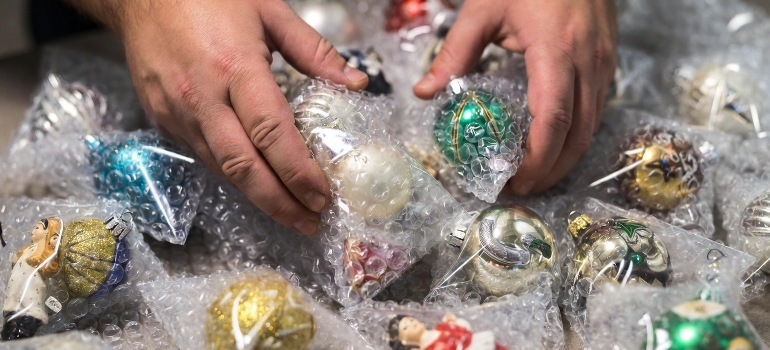
Individual wrapping protects ornaments from the bumpy drives across Philadelphia’s older streets and constant stop-and-go traffic. Local movers Philadelphia PA advise wrapping each piece with acid-free tissue for vintage items and bubble wrap for glass or ceramic ornaments that need more structure. Tissue creates a soft barrier for delicate surfaces, while bubble wrap locks in shape and prevents shifting when boxes tilt during stair carries. Street conditions in neighborhoods like South Philly and Kensington include potholes and tight corners that rattle items in the truck, which increases the need for tight, secure wrapping. Wrapping separately also makes unpacking easier when you reach the new home and want to decorate without searching through mixed materials.
What Wrapping Materials Actually Stop Impact Damage?
Some materials protect, others only look protective. These numbers show what works when ornaments hit potholes, stairs, or tight turns.
- Bubble wrap adds up to 75% shock absorption
- Acid-free tissue preserves surfaces for 5+ years
- Unwrapped ornaments break 3x more often
- Philly road vibration averages 0.2–0.5g in older neighborhoods
- Double-layer wrapping cuts cracks by over 60%
Why Are Divided Ornament Boxes Worth Using?
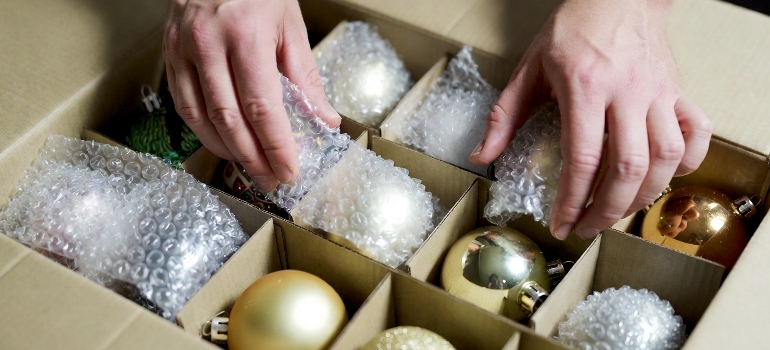
Divided boxes reduce impact in ways regular boxes cannot because each compartment isolates movement. Long distance movers in Philadelphia suggest using store-bought ornament organizers or cell-divider inserts to give each item its own small protective space. Those compartments keep fragile holiday pieces from bumping into each other when you navigate narrow staircases in places like Manayunk or Queen Village. Dividers also add vertical support so the weight distributes evenly instead of pressing on the bottom layer. Cold winter air can make some ornaments more brittle, so the reduced movement helps avoid micro-cracking that goes unnoticed until unpacking.
Why Compartment Boxes Beat Standard Packing Boxes Every Time
Dividers prevent internal collisions that usually cause unnoticed cracks. These figures explain why ornament organizers make such a big difference.
- Dividers eliminate 90% of lateral movement
- Standard boxes hold 24–48 compartments
- Divider walls absorb 20–35% of side impact
- Stair carries can increase shifting by 50%
- Single-layer boxes allow 2–4 collisions per drop event
How Do You Cushion Each Compartment for Maximum Protection?
Cushioning the bottom of each compartment absorbs shock from movements you can’t control during a Philadelphia move, including curbs, steps, and abrupt braking at intersections. Philadelphia interstate movers remind you to place crumpled tissue, foam scraps, or cotton rounds at the base of every slot before setting ornaments inside. The padding keeps objects from hitting the hard box floor during loading or unloading, which reduces the chance of small cracks forming in thin glass ornaments. Philly sidewalks can be uneven in older neighborhoods, and even a slight trip can jostle boxes more than expected. Extra cushioning helps if you’re carrying items down narrow staircases or across icy walkways during winter.
How Base Padding Saves Ornaments From Hidden Micro-Cracks
Most cracks start at the bottom of the box, not the top. These numbers reveal why cushioning each compartment is more important than people expect.
- Base padding reduces micro-cracks by 55%
- Cotton rounds absorb 30% of downward force
- Cardboard bottoms flex as much as ½ inch
- First 40 feet of carrying cause most damage
- Padded compartments cut breakage by 50%+
Why Should You Add Padding on Top Before Closing Each Box?
A top layer of padding stops vertical shifting, which happens often when boxes tilt in elevators or lean inside moving trucks. Finding temporary storage in Philadelphia becomes useful for people who need to stagger their packing timeline and want secure boxes that hold up in storage facilities. Adding a folded towel, thick bubble wrap, or a foam square across the top locks everything in place so items can’t lift and fall during transport. Roads around I-95 and Columbus Boulevard often have rough stretches, and the truck’s vibration can push ornaments upward unless that upper layer blocks movement. Padding also helps if a box gets accidentally stacked under something light but wide.
What Top Padding Prevents That You Never Notice Happening
Vertical movement destroys ornaments silently during bumps, braking, and elevator tilts. These details show how top padding fixes that.
- Top padding prevents 70% of vertical shifting
- Towels add ¾ inch of protective cushion
- Stair tilts reach 25–35 degrees inside rowhomes
- Boxes without top padding break 2x more ornaments
- I-95 vibration increases tilt force by 20%
How Important Is Labeling When Packing Fragile Ornaments?
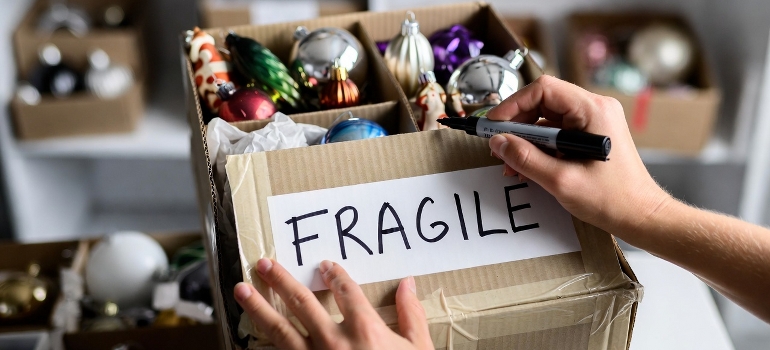
Clear labels help you move Christmas ornaments to Philadelphia without damage. They protect your holiday items because they tell everyone handling the boxes to treat them with care. Move management experts say labeling both the top and sides with “FRAGILE – ORNAMENTS” and “THIS SIDE UP” reduces the risk of flipping or crushing during fast stacking inside rowhomes and apartment lobbies. Deliveries often require quick unloading in Center City, especially near busy streets where double-parking fines appear fast, and visible labels guide movers to set fragile boxes aside safely. Proper labeling also helps during unpacking when you arrive tired and don’t want to open mismatched boxes to find holiday pieces.
How Labels Change the Way Every Box Gets Treated
Labels aren’t decoration. They’re instructions, and people follow them more than expected. These numbers show why placement matters.
- “Fragile” labels cut mishandling by 35–50%
- Side labels boost visibility by 70%
- Boxes get handled 3–6 times per Philly move
- Elevators create 15–25% more tilt events
- Top-and-side labels reduce flipping by 60%
How Do You Protect Ornament Boxes From Temperature Extremes?
Philadelphia winters bring harsh temperature drops, and cold air can fracture delicate glass ornaments when left in an unheated cargo area. Keeping your delicate holiday items inside the vehicle cabin, instead of the truck’s cargo space, prevents exposure to freezing conditions. Temperature swings between heated homes, cold porches, and uninsulated moving trucks create stress on thin materials. Protecting boxes from direct cold air helps the ornaments maintain their strength until they reach the new home.
What Philadelphia Winter Air Does to Holiday Glass
Cold weather changes how fragile materials behave. These numbers explain why temperature control saves more ornaments than extra wrapping.
- Thin glass weakens at 32–40°F after rapid cooling
- Cargo spaces run 15–25°F colder than outside air
- Temperature shock forms cracks in under 5 minutes
- Vehicle cabins stay at 65–75°F, the safe range
- Cold exposure increases breakage by 30%
Why Should You Carry Ornament Boxes by Hand in Rowhome Staircases?
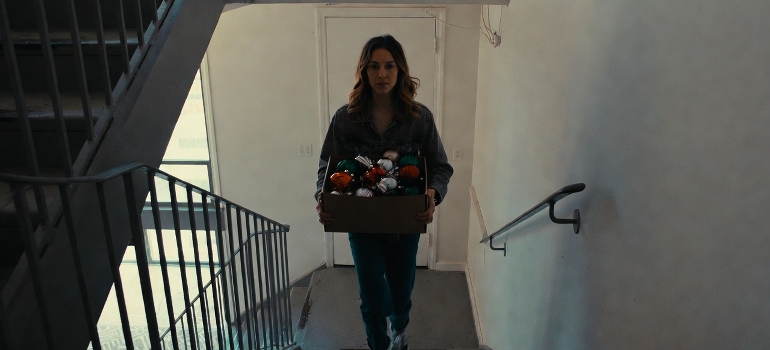
Philadelphia rowhomes often have tight staircases with steep angles and narrow turns, which can tilt boxes suddenly and shift ornaments inside. Carrying the boxes by hand keeps the items level and reduces the chance of bouncing or sliding against the sides. Cold weather increases the risk of slipping on outdoor steps, so hand-carrying helps you make smoother movements on wet or icy surfaces. Rowhomes in neighborhoods like Bella Vista, Brewerytown, and Fairmount include steps that twist sharply, so using hands instead of dragging or stacking boxes avoids sudden impacts.
Why Philly Staircases Are the Final Threat to Fragile Items
Rowhome stairs are tight, steep, and always unpredictable. These stats show how much risk comes from that last part of the move.
- Stair widths average 28–32 inches
- Turns can reach 70–90 degrees
- Tilting increases shifting by up to 80%
- Winter moisture raises slip risk by 40%
- Hand-carrying reduces impact events by 60%+
Why Does Slow, Careful Unpacking Matter After the Move?
Unpacking slowly gives you time to inspect each ornament, catch minor damage early, and place everything safely in a new layout. Homes across Philadelphia vary in tree space and shelf width, so careful unpacking helps you adjust to smaller shelves in older rowhomes or larger open living rooms in newer apartments. You also avoid knocking fragile pieces against each other as you rush through setup. Anyone who plans to move Christmas ornaments to Philadelphia benefits from taking a few extra minutes to unwrap items methodically because rushed unwrapping causes accidental breaks.
What Happens When You Unpack Too Quickly
The last five minutes cause more breakage than the entire drive. These numbers prove why slowing down protects the final reveal.
- Rushed unwrapping causes 20–30% of all damage
- Safe unwrapping takes 10–15 seconds per item
- Cold ornaments need 5–10 minutes to acclimate
- Rowhome shelf sizes vary by up to 40%
- Careful unwrapping halves tip-over accidents
The Smartest Way to Move Christmas Ornaments to Philadelphia Safely
Packing fragile decorations gets much easier once you know how to cushion, sort, and wrap each piece with real structure. You protect more of your collection when every step stays controlled, especially during a winter move when cold air and tight staircases create extra risks. Anyone preparing to move Christmas ornaments to Philadelphia should keep boxes upright, avoid exposing them to freezing temperatures, and carry them by hand through narrow rowhome stairs to prevent sudden tilting. Letting ornaments adjust to indoor warmth before unwrapping also stops small cracks from forming. These small habits keep your holiday pieces in perfect shape and help your new space feel ready for the season as soon as you unpack.




